Portable Power Tools
Identify the tools that will be on site and which will be away with another crew. Include detachable power leads when defining the scope.

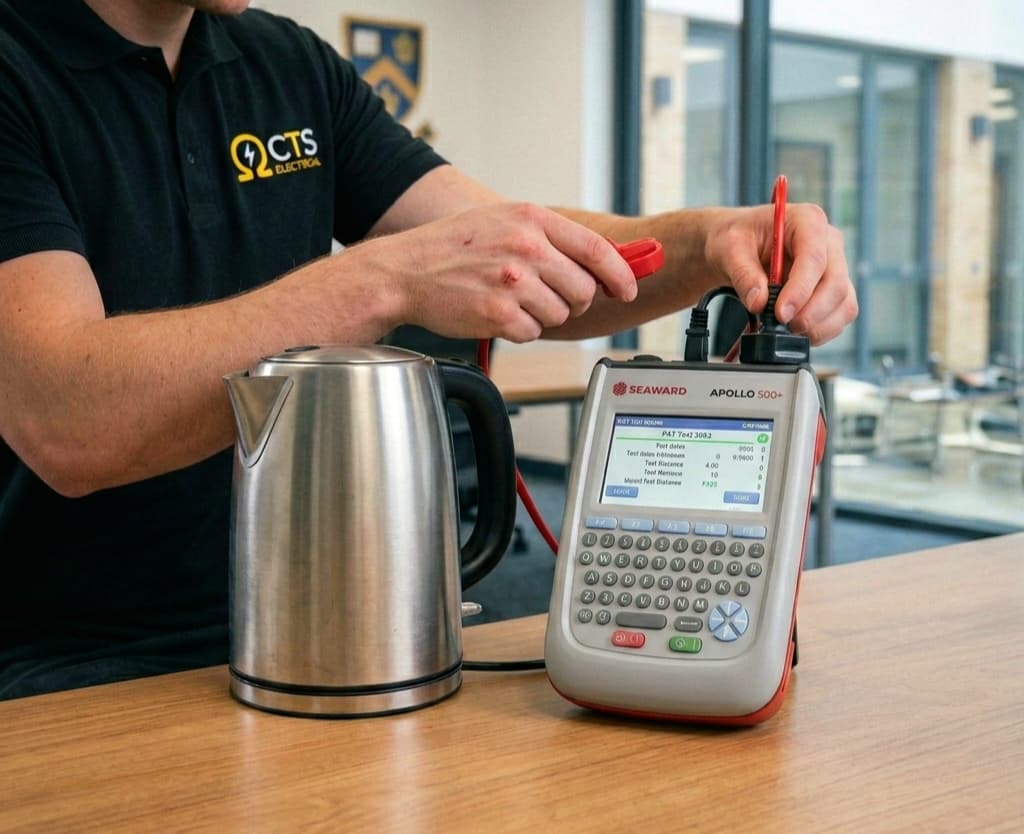
Plan portable appliance testing around your tools, crews and working hours with clear equipment records and practical follow up.






Tools and electrical equipment move between stores, vehicles, work areas and site cabins. Keeping track of their condition is easier when inspection and testing are planned around how your team actually works.
CTS Electrical Services provides PAT testing across Northern Ireland. For contractors and workshop managers, a useful starting point is a clear equipment list, agreed access and a practical plan for returning assessed items to the right people.
Start with the equipment used on the job, then work through the supporting areas. Portable tools, welfare appliances and office equipment may be used very differently, so each group needs to be considered in context.
List
The Equipment
Plan
The Access
Record
The Results
These groups help build an equipment list. The appropriate inspection and testing method depends on the item, its construction and how it is used.
Identify the tools that will be on site and which will be away with another crew. Include detachable power leads when defining the scope.
Battery tools may still rely on mains powered chargers. Include these in the equipment assessment rather than counting only the tools.
Consider extension leads, cable reels and portable lights that move between work areas or are regularly packed away.
Include relevant appliances in site cabins and staff facilities, alongside computers, printers and cleaning equipment.
Agree who is responsible for checking each group. Do not assume equipment brought onto the premises has already been covered.
Share supply voltages and specialist equipment details before the visit. Fixed machinery and the installation may need a separate assessment.
Choose the service that best matches the equipment, installation or action identified in this guide.
Discuss portable appliance inspection and testing around your equipment, working hours and access.
Coordinate equipment records and access when crews or appliances move between several locations.
Understand the next steps for identifying a failed item and recording the action taken.
Confirm the equipment that can be accessed on the day and group items by crew or work area. A named contact can explain local restrictions and help keep track of what has been checked.
Share approximate equipment numbers and existing asset records
Confirm site inductions, access rules and restricted areas
Identify equipment that needs a planned stop or shutdown
Agree collection points or batches around shifts and active work areas
Keep unavailable items visible for a later agreed assessment
Confirm who receives results and follows up failed equipment
A shared approach makes it easier to manage similar tools across crews without losing the identity or status of individual items.
Review equipment groups, supply types, access requirements and the people responsible for the work area.
Agree when equipment can be made available and how it will be identified before it returns to the right team.
Complete the agreed inspection and suitable electrical testing. Report items that need attention and identify anything unavailable.
Keep results with the equipment records, control failed items and review future inspection needs using the findings.
HSE guidance explains that inspection and testing frequency should reflect the equipment and its working environment. A tool used on a construction site may need attention more frequently than an appliance kept in a quiet office. Report damage promptly and keep suspect equipment out of normal use until it has been assessed. CTS can discuss the scope and records needed for a proportionate programme.
There is no single interval for every item. Equipment type, movement, working conditions, manufacturer information and previous findings should inform the inspection and testing programme. Site or contract requirements should also be discussed when defining the work.
Yes, mains powered chargers and their leads should be considered when building the equipment list. The appropriate inspection and testing method depends on the equipment. Battery tools should not be treated as identical to mains powered tools.
Agree who is responsible for the equipment and what evidence is needed before it is used. Share those arrangements when planning the visit rather than assuming the equipment falls within another organisation’s programme.
Portable appliance testing does not automatically cover fixed machinery or the site electrical installation. Explain specialist items, fixed connections and supply types to CTS so the correct scope can be discussed.
Identify the item clearly, keep it from normal use and record the finding. A competent person should determine the appropriate repair, replacement or further assessment before it is returned to service.
No. The date records your preference. The CTS team will call to confirm availability and arrange a suitable time.
Tell us where testing is needed, the equipment involved and when it can be made available. Any date you choose is a preference. The CTS team will call to confirm availability and discuss the scope.
Talk directly to our Lisburn team about scope, access, testing or the best next step for your premises.

Thank you for your enquiry. We will be in touch shortly.