Office and IT Equipment
Consider computers, monitors, docking stations, printers and power supplies. Coordinate access with the people who manage your IT.

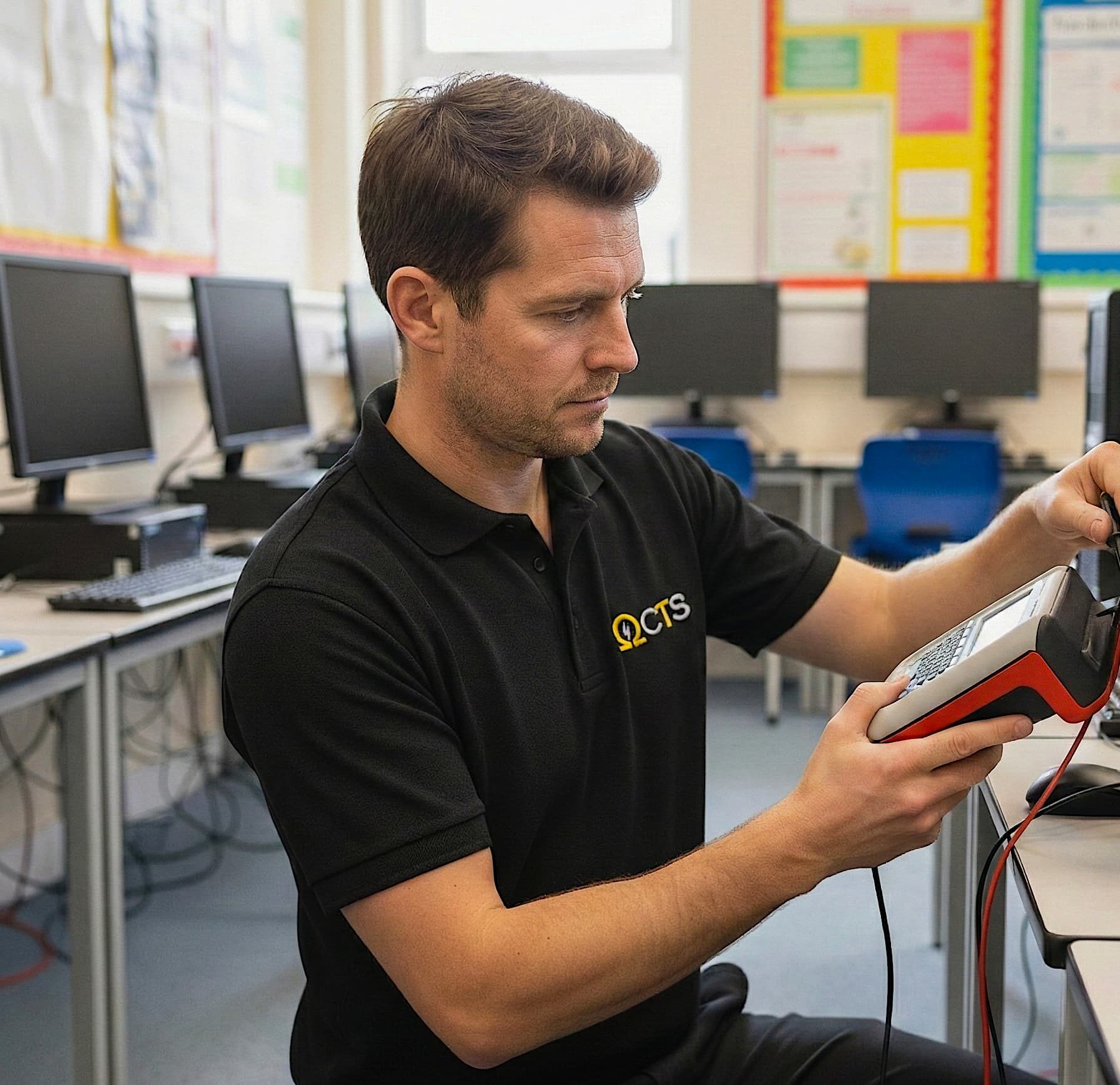
Arrange equipment checks around your staff, customers and opening hours with clear records and a practical plan for the visit.






A useful PAT testing visit starts with knowing what needs attention and when it can be accessed. For a Belfast office, shop or shared commercial premises, that means planning around people, opening hours and the equipment your business relies on.
CTS Electrical Services provides commercial PAT testing in Belfast and across Northern Ireland. Our team plans visits around the premises, equipment volume and access requirements so the work can be organised with less disruption.
Start with an equipment list that includes the areas customers do not normally see. Staff rooms, cupboards, stockrooms and meeting spaces can contain appliances that were not on the previous register.
Agree
The Scope
Plan
The Timing
Keep
Clear Records
Include each equipment group in the assessment. Being on the list does not mean every item requires the same inspection method or testing interval.
Consider computers, monitors, docking stations, printers and power supplies. Coordinate access with the people who manage your IT.
Identify plug connected equipment at counters and portable displays. Flag items that support payments or customer service before anything is disconnected.
Include relevant kettles, microwaves and other appliances in kitchens or shared staff spaces.
Consider extension leads, detachable cables and vacuum cleaners, including equipment stored away from the main working areas.
Agree a clear policy for employee owned appliances and equipment shared between occupants in a commercial building.
Hard wired appliances and the building’s fixed installation may need a separate assessment. Explain these items when agreeing the scope.
Choose the service that best matches the equipment, installation or action identified in this guide.
View the main CTS service for portable appliance inspection, testing and clear equipment records.
Build a more complete equipment list before arranging the visit.
Understand how to identify a failed appliance and manage the next action.
Identify someone who can provide access and agree the order of work. For an office, consider staff schedules and meeting rooms. For a shop, consider quieter trading periods and access to counters or stockrooms.
Share your equipment list and any previous testing records
Confirm opening hours, occupied areas and locked rooms
Coordinate computer shutdowns with staff and IT support
Identify critical systems that must not be disconnected without agreement
Make stored appliances and shared equipment available
Agree who receives results and arranges any follow up
The visit should leave your team with an understandable record and a clear view of anything still requiring attention.
Confirm the premises, equipment groups, access arrangements and approximate number of items.
Agree the working order and any necessary shutdowns around staff, customers and essential systems.
Carry out the agreed visual inspection and suitable electrical testing with clear identification of assessed items.
Supply the asset record, highlight failed equipment and identify any items that were not available for assessment.
A static monitor in a clean office and a vacuum cleaner moved around a busy shop face different conditions. HSE guidance for offices and shops explains that every appliance does not automatically need an annual PAT test. The maintenance approach should reflect use, environment and previous findings. Report damaged equipment promptly rather than relying on a label from an earlier visit.
Yes. CTS provides PAT testing for commercial premises in Belfast and across Northern Ireland. Share the location, equipment information and preferred timing so the scope and access arrangements can be discussed.
No. HSE guidance explains that a universal annual test is not necessary for every appliance in a lower risk environment. The approach should consider equipment type, use, movement, environment and previous findings.
Some inspection and testing requires equipment to be disconnected. Agree this with CTS and your IT support before the visit. Staff should save work and follow normal shutdown procedures. Critical systems need a specific agreed arrangement.
Tell CTS when equipment and work areas can be accessed. Timing can then be discussed around trading hours, staff attendance and operational requirements. The final arrangements are confirmed with the team.
CTS supplies a digital asset record with failed items highlighted. Keep it available to the person managing the premises and follow up equipment that was unavailable or needs further attention.
The premises location, approximate equipment numbers, existing records where available and preferred timing provide a useful starting point. Mention shared premises, restricted access and systems that cannot be interrupted.
Tell us your Belfast premises location, approximate equipment numbers and preferred timing. The CTS team will review your enquiry and contact you to discuss the work. A free site survey can be discussed if it would help define the scope.
Talk directly to our Lisburn team about scope, access, testing or the best next step for your premises.
Thank you for your enquiry. We will be in touch shortly.

