Power Supply Fault
The panel may report a problem with its incoming supply or charging arrangements. Tell the engineer about any recent power interruption without opening the enclosure.

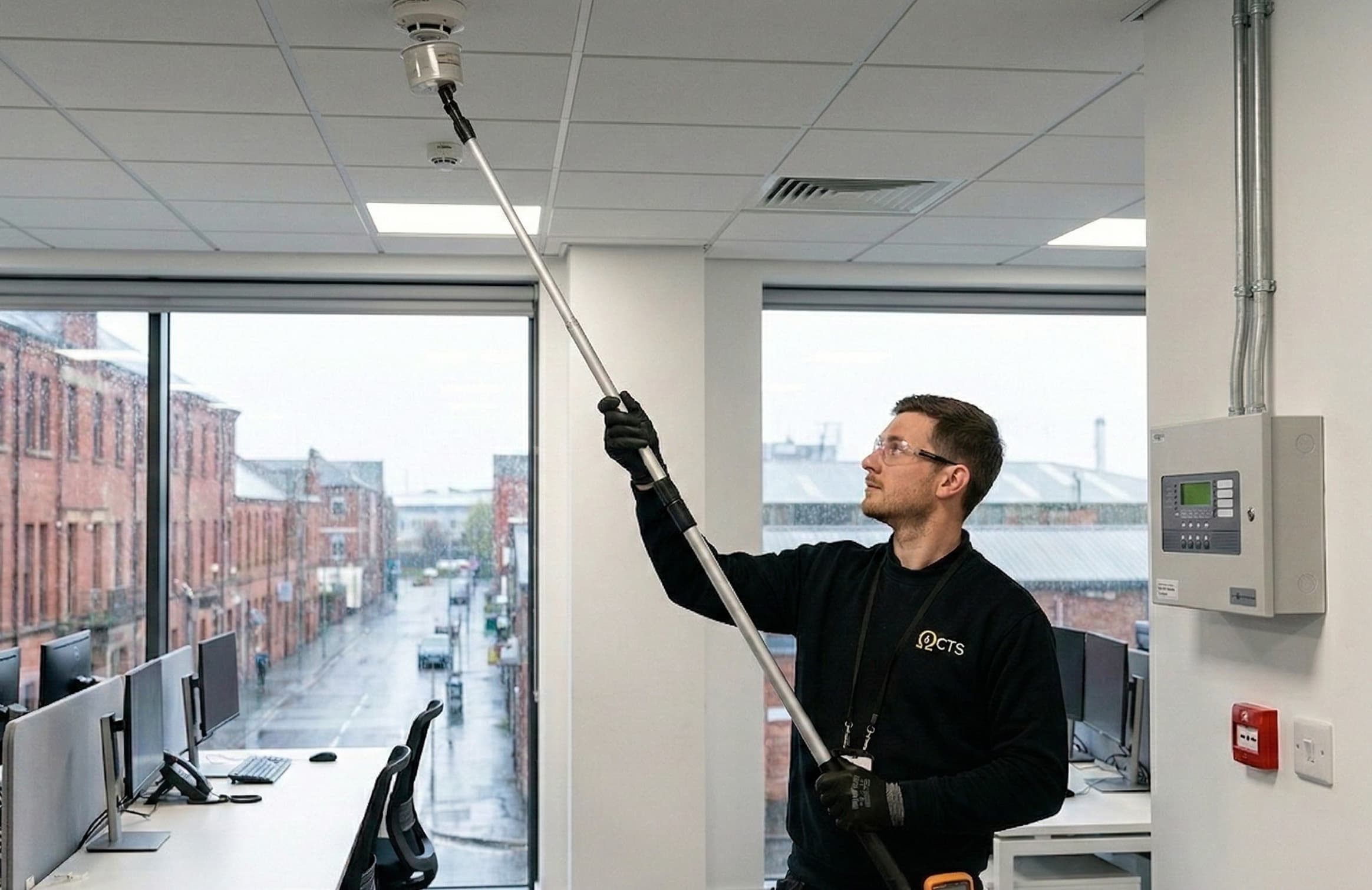
Understand a fault warning, gather the right information and arrange professional support for your commercial fire alarm system.





A warning light or buzzer on a fire alarm panel can be unsettling. A fault indication generally means the system has detected a problem that needs attention. It is different from a fire alarm activation, but it may affect part of the protection your premises relies on.
The exact meaning depends on the panel model, displayed message and system configuration. Do not diagnose the problem from the colour of a light alone. Use the instructions for your own system and notify the person managing fire safety at the premises.
If the fire alarm activates, follow your emergency fire action plan. If there is a fire or signs of fire, call 999. A fault message must never be used as a reason to disregard an alarm activation.
Read
The Display
Record
The Details
Report
The Fault
Know Your System
Keep the panel instructions and fire safety records accessible
These examples explain why a fault needs professional diagnosis. The wording on your panel may differ and a displayed message does not confirm the underlying cause.
The panel may report a problem with its incoming supply or charging arrangements. Tell the engineer about any recent power interruption without opening the enclosure.
A standby battery warning needs investigation of the battery and associated equipment. Silencing the panel buzzer does not restore battery capacity.
A message may identify a zone, loop or device. Record the full wording and location so the engineer has a useful starting point.
A warning affecting alarm sounders needs prompt attention because it may affect how occupants are warned. Report it to your maintenance provider without waiting for the next routine visit.
Some indicators describe a disabled function or test mode rather than a fault. An unexplained indication still needs checking by an authorised person using the system instructions.
Intermittent warnings can be harder to trace. Keep a dated record of each occurrence and any nearby works rather than assuming the problem is resolved when the display clears.
Choose the service that best matches the equipment, installation or action identified in this guide.
Discuss scheduled testing, fault finding and maintenance for your commercial system.
Speak to CTS about a reported electrical fault and the support your premises needs.
Share your location and maintenance requirements to request a free quotation.
Useful information helps the maintenance team understand the reported fault and plan access. Read the display only where it is safe to do so. Do not open the panel, disconnect batteries or disable equipment to investigate it yourself.
Record the full message, fault code and indicated zone or device
Note when the warning first appeared and whether it keeps returning
Share the panel make and model or a clear photograph of the closed panel
Explain any recent power cuts, building work or changes nearby
Have the logbook, previous service reports and zone plan available
Confirm the premises address, occupancy and contact for access
CTS provides fire alarm testing, fault finding and maintenance in Northern Ireland. The work needed depends on the system and the fault reported.
Explain the warning and how the building is being used. Your fire safety lead should obtain advice on any immediate precautions needed while protection is impaired.
The engineer reviews the panel information and relevant records, then carries out checks appropriate to the affected equipment and reported condition.
Discuss the findings and any repair or replacement required. Access, parts and further investigation may affect what can be completed during the visit.
Keep the findings and action taken with your fire safety records. Make sure any unresolved issue has a named person responsible for the next step.
Acknowledging a buzzer or seeing a warning disappear does not establish that the cause has been corrected. Report recurring messages and keep the history available for the engineer. NIFRS advises businesses to keep records of system testing and maintenance and have arrangements for faults to be rectified. A planned maintenance programme supports those arrangements alongside prompt reporting between visits.
A fault warning reports a system problem and is different from a fire alarm condition. Faults and fire signals must both be dealt with under your premises procedures. If an alarm activates, follow the emergency fire action plan. If there is a fire or signs of fire, call 999.
Only authorised users should operate the controls in accordance with the system instructions and premises procedures. Resetting a display does not repair the cause. Do not repeatedly reset, isolate or disable equipment to hide a warning.
That decision needs a specific assessment of the fault, affected protection and building use. The person managing fire safety should seek competent advice promptly and determine any necessary precautions or restrictions. A generic article cannot confirm that occupation is safe.
Report a fault promptly rather than waiting for a planned visit. The maintenance provider needs the details to advise on the response. Tell them if the system is not functioning or the warning affects sounders or detection.
There may be an unresolved or intermittent problem. The cause needs investigation of your system. A dated history of messages and previous work is more useful than assumptions based on the warning clearing temporarily.
Call 028 9013 3160 to discuss a current fault. For planned testing or maintenance, request a free quotation with your premises location and system details. Availability and the scope of work are confirmed with the team.
For planned work, tell us about your premises, alarm system and maintenance needs. For a current fault, call 028 9013 3160 so the team can discuss the situation. If there is a fire or signs of fire, follow your emergency procedure and call 999.
Talk directly to our Lisburn team about scope, access, testing or the best next step for your premises.
Thank you for your enquiry. We will be in touch shortly.