RedClass A
Water
Typical Use
Solid combustibles such as wood, paper and textiles.
Important Caution
Not suitable for live electrical equipment.
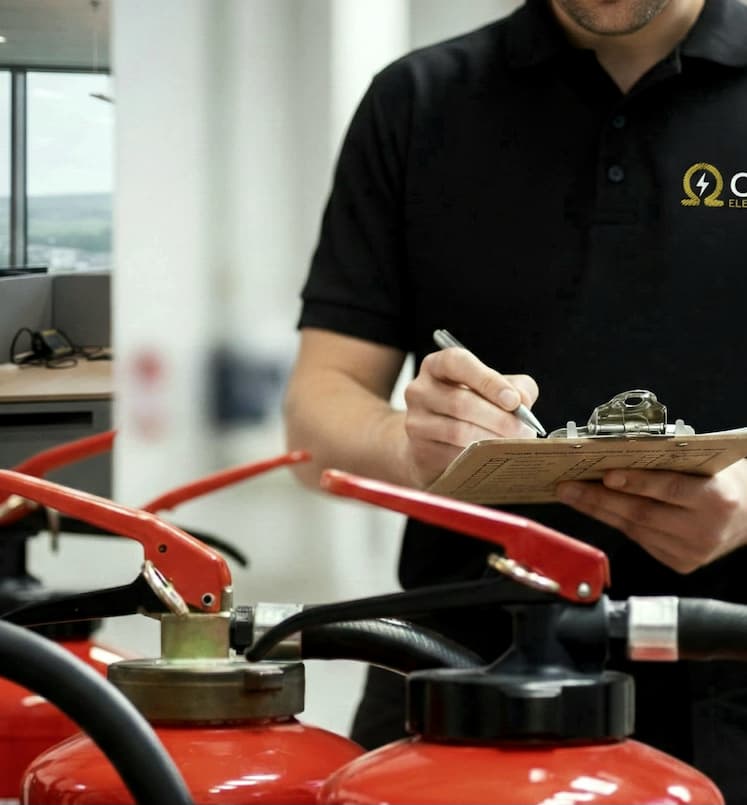
Understand how risk assessment, extinguisher selection, safe positioning and planned maintenance work together for Northern Ireland businesses.





The main fire safety laws for non-domestic premises in Northern Ireland are the Fire and Rescue Services (Northern Ireland) Order 2006 and the Fire Safety Regulations (Northern Ireland) 2010.
Those responsible for premises must identify fire risks, put suitable precautions in place and maintain firefighting equipment in efficient working order. That means there is no universal extinguisher package. The correct provision follows the risks found on your site.
Risk-Based Provision
Correct Type. Safe Position. Maintained & Ready.
Using the wrong extinguisher can spread a fire or expose the user to greater danger. Selection should be completed or reviewed by a competent person.
Typical Use
Solid combustibles such as wood, paper and textiles.
Important Caution
Not suitable for live electrical equipment.
Typical Use
Solid materials and many flammable liquid risks.
Important Caution
Not for deep-fat fryers. Suitability depends on the specific product and risk.
Typical Use
Particularly suitable for many fires involving electrical equipment.
Important Caution
Provides limited cooling. Re-ignition remains possible if the heat source persists.
Typical Use
Can provide rapid knock-down across several fire classes.
Important Caution
Can impair visibility and breathing, so it is not generally suitable for enclosed spaces.
Typical Use
Designed for commercial cooking oil and deep-fat fryer risks.
Important Caution
Provision must follow the actual catering risk and fire risk assessment.
30m
Ideal Maximum Travel In NIFRS Guidance
Visible
Accessible & Ready
A suitable extinguisher cannot help if it is hidden, obstructed or unsafe to reach. Use the fire risk assessment and competent advice to plan the final arrangement.
Match the number, type and size of units to the fire classes and hazards present in your premises.
Position general-risk extinguishers close to room, floor or final exits where they remain visible and accessible.
Place the correct unit near a defined hazard such as electrical equipment or flammable liquids, but where it can still be reached safely.
Avoid loose floor-standing units. NIFRS guidance describes convenient handle heights of about 1m for larger units and 1.5m for smaller units.
NIFRS guidance says ideally no one should travel more than 30m to reach an extinguisher. The final arrangement must still reflect your premises and risks.
Routine site checks and competent annual maintenance answer different questions. You need both within a suitable maintenance system.
Confirm each unit is present, visible, accessible and apparently serviceable. In normal conditions, NIFRS guidance says a monthly check should be enough, with more frequent checks where conditions demand it.
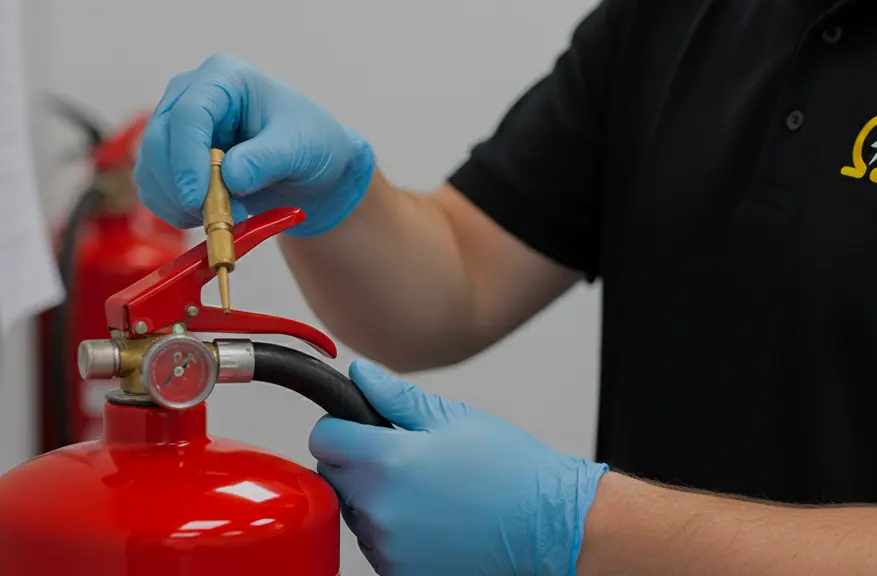
A competent person should complete annual maintenance, update service information and explain any unit that is discharged, damaged, corroded, unsuitable or due further action.
Plan extended servicing, pressure testing or replacement according to extinguisher type, condition, manufacturer information and the applicable maintenance standard.
Extinguisher provision often becomes less reliable through gradual change. Equipment moves, premises are altered and service dates pass without anyone reviewing the complete picture.
Book A Compliance ReviewUnits blocked by stock, furniture or temporary displays
Extinguishers moved away from exits or specific hazards
Wrong type retained after equipment or process changes
Missing pins, damaged seals, corrosion or low pressure
Monthly checks not recorded or consistently completed
Annual maintenance dates missed across part of the estate
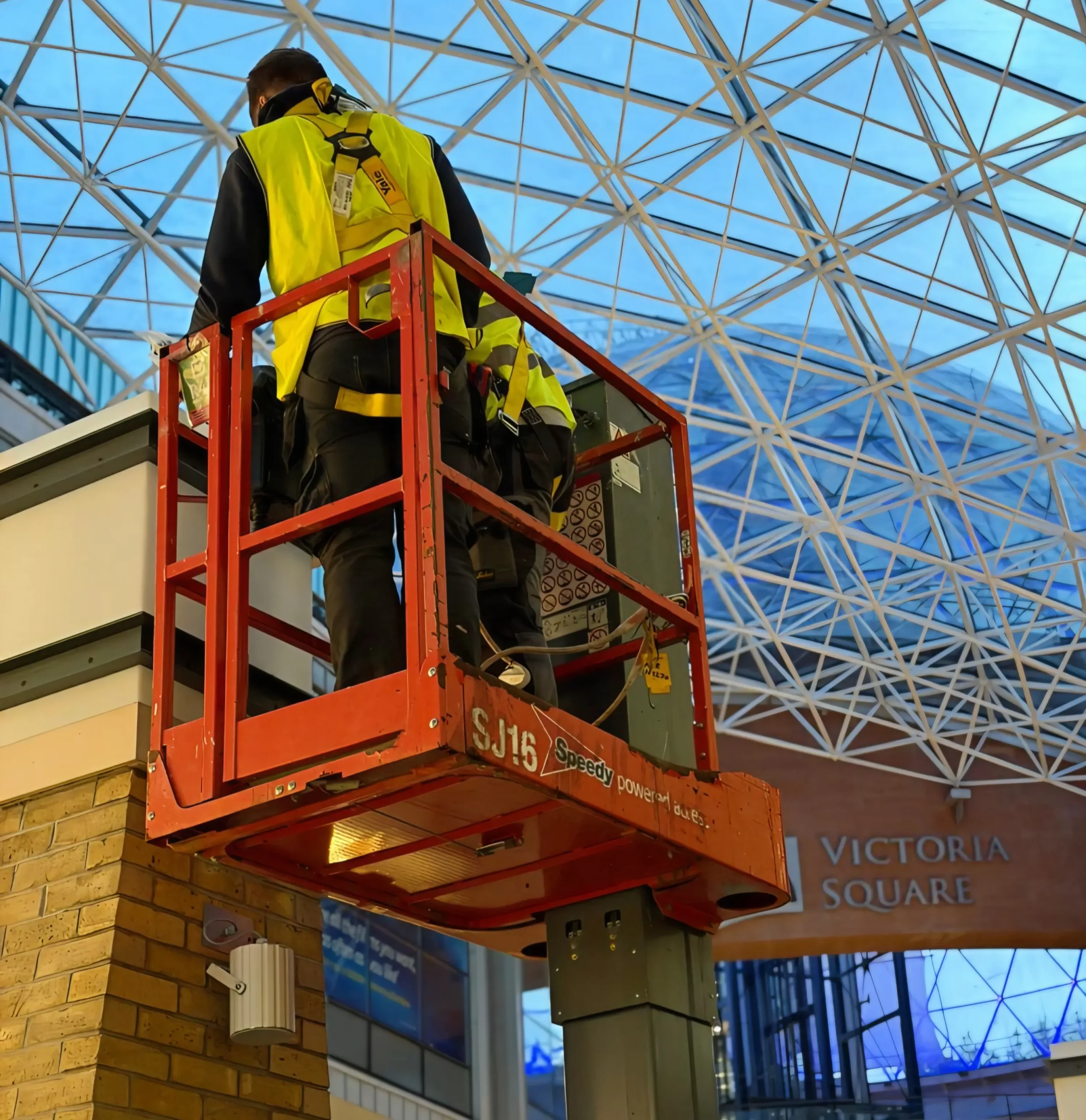
We can inspect, service and document your extinguisher provision, then explain any replacement or positioning work in clear commercial terms.
No. The appropriate type, number and position depend on the fire risks identified in your premises. Your fire risk assessment should inform the provision and a competent person can advise on the practical arrangement.
NIFRS guidance recommends brief checks to confirm serviceability, with monthly checks normally sufficient in typical conditions. Competent maintenance should be completed annually, with additional action where damage, discharge or local conditions require it.
General-risk extinguishers are normally positioned on escape routes near room, floor or final exits. Equipment for a specific hazard should be close enough to be useful but placed so that it can be reached and used safely.
CO2 is particularly suitable for many fires involving electrical equipment because it leaves no residue. The overall provision still needs to reflect every fire class present and the findings of the fire risk assessment.
Yes. Following inspection, we can explain any issues with condition, type, location or service status and provide a clear quotation for suitable replacement equipment where required.
Official Guidance Used For This Article
This guide is based on current NIFRS business fire safety information and the NIFRS fire safety guide for offices and shops. British Standards are referenced as recognised guidance, while the fire risk assessment remains the basis for deciding suitable precautions.
This article provides general guidance and does not replace a suitable fire risk assessment, electrical inspection or advice for the specific conditions at your premises.
Request Sent!
A CTS Fire & Security specialist will be in touch shortly.
Share a few details and our team will recommend the right testing scope for your premises with clear costs before work is scheduled.
Tell us about your premises, equipment and current service dates. We will confirm the appropriate survey or maintenance scope.