

 The Reality of Workplace Risk
 The Reality of Workplace Risk
Operating commercial premises in Northern Ireland brings strict legal duties. Electrical faults are consistently ranked as a leading cause of workplace fires. Ignorance of the law is never an acceptable defence.
To remain compliant, business owners must:
- Complete comprehensive Fire Risk Assessments.
- Conduct regular Fixed Wire Testing (EICR) and PAT testing.
- Install and maintain critical life safety systems.
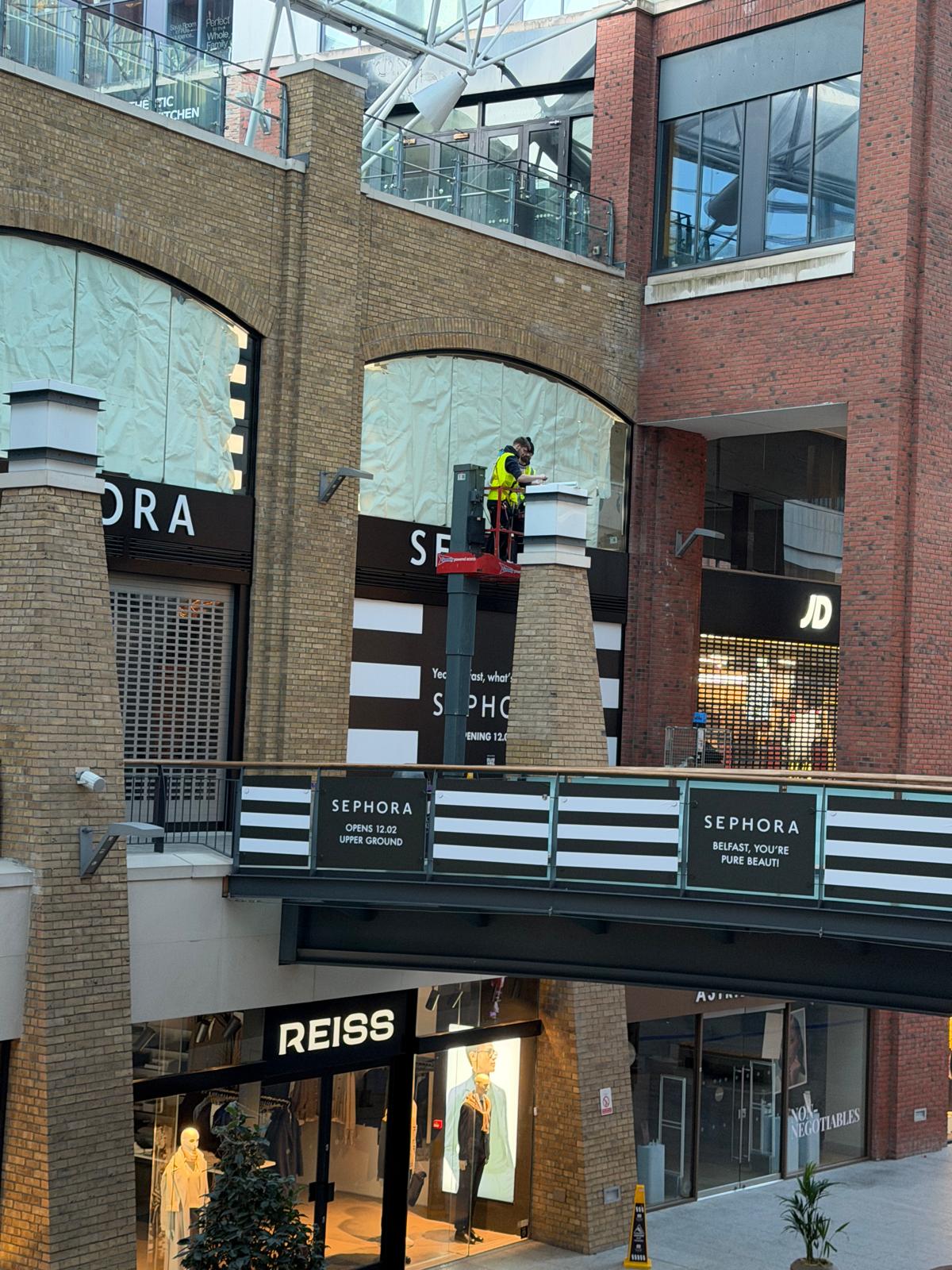
Electrical Compliance Framework
 Electrical Compliance Framework
Commercial EICR (Fixed Wire)
A comprehensive inspection of distribution boards, consumer units and circuits to identify overloaded lines or missing earthing.
- Offices & Retail: Every 5 years.
- Industrial & Factories: Every 3 years.
- Specialist Locations: Annual testing.
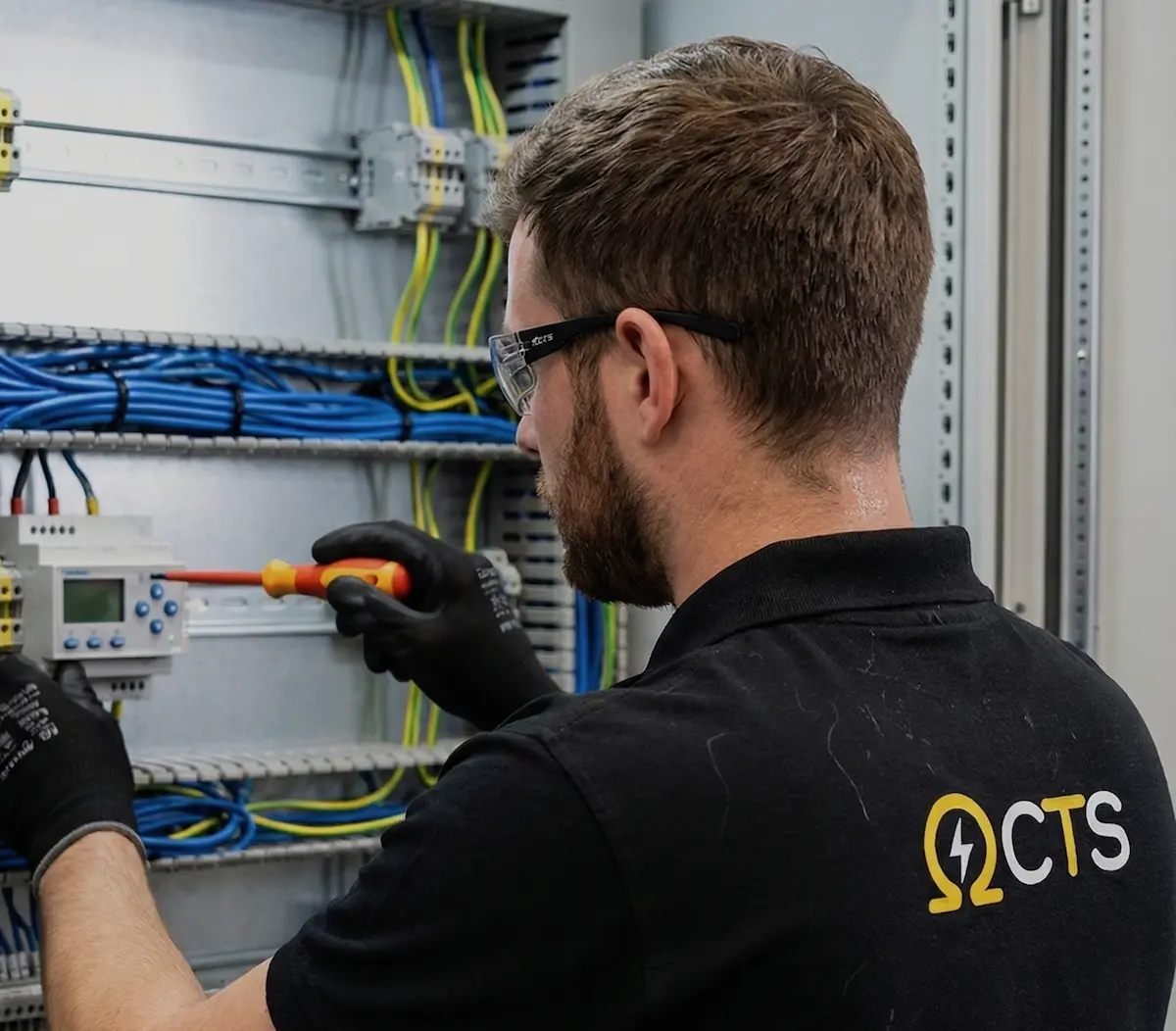
Portable Appliance Testing
 Portable Appliance Testing
PAT testing targets items that plug in, from office computers and staff kettles to heavy-duty power tools. This prevents faulty appliances from acting as ignition sources.
- Visual Inspection: Checking cables and plugs for physical damage.
- Electronic Testing: Executing continuity and insulation checks to catch underlying faults.

Life Safety Infrastructure
 Life Safety Infrastructure
Fire Alarms
 Fire Alarms
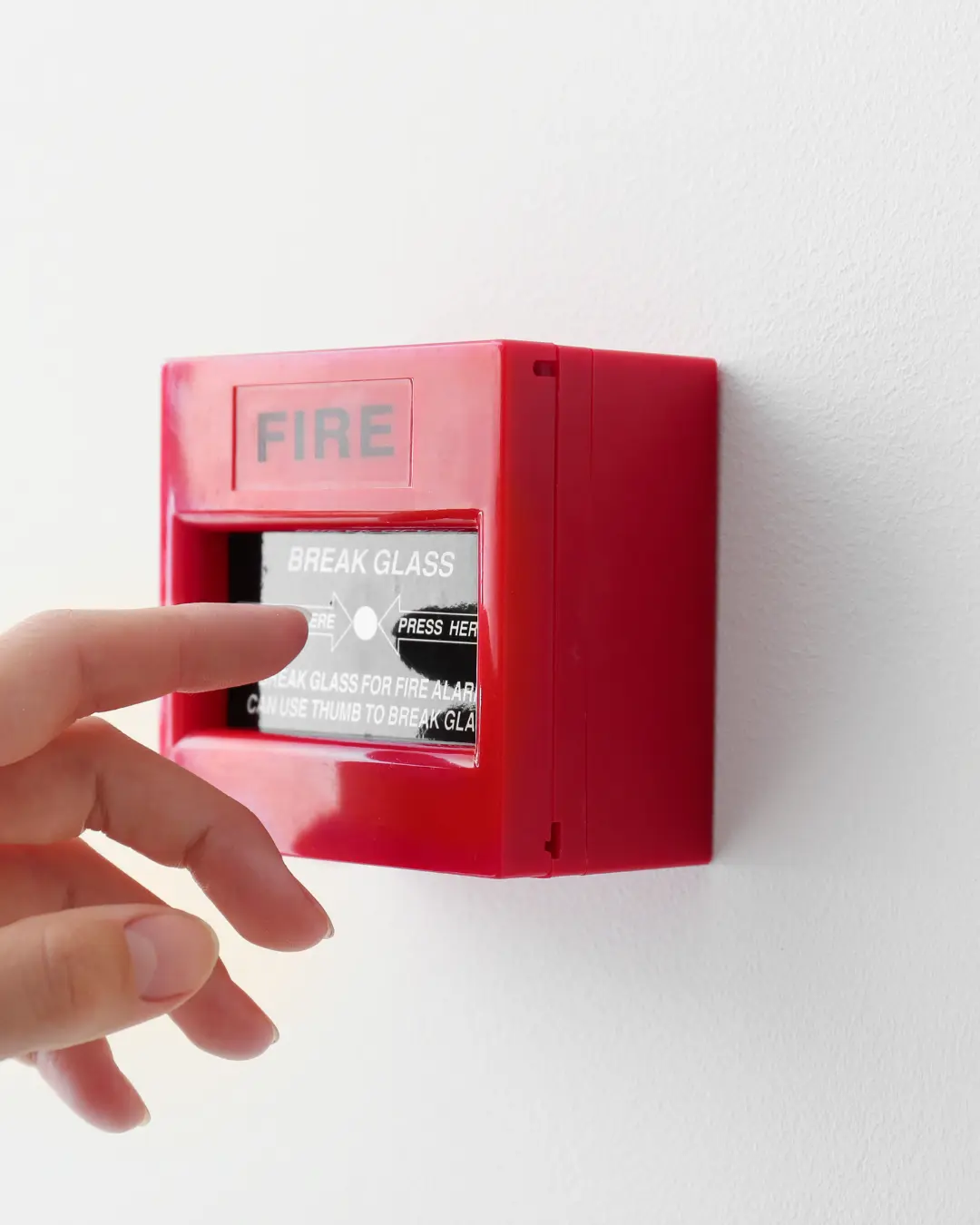
Operating under BS 5839 guidelines, commercial fire alarms must be rigorously maintained.
- Frequency: Serviced every 6 months.
- Purpose: Prevent false alarms and provide early evacuation warnings.
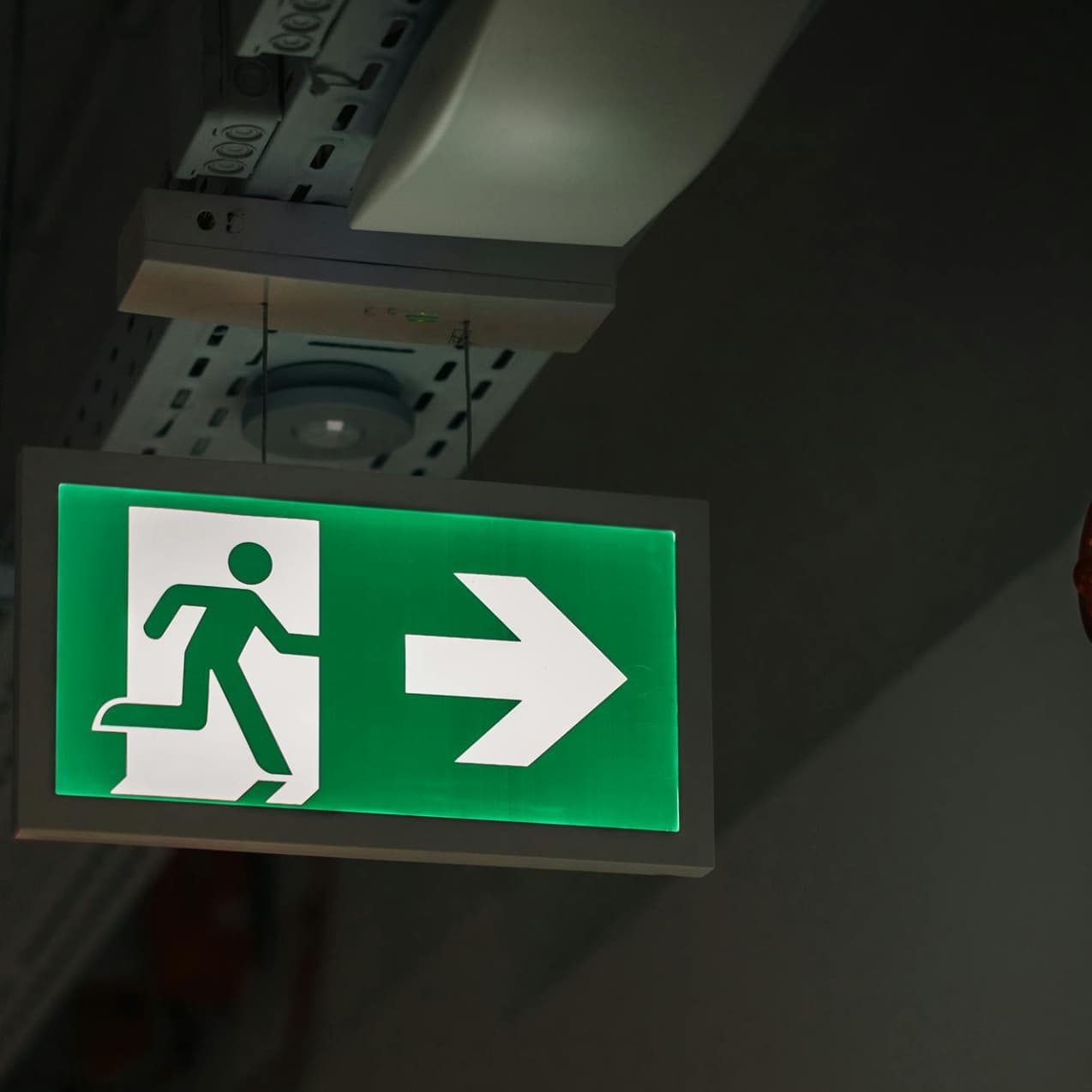
Emergency Lighting
 Emergency Lighting
In the event of a power failure, sudden darkness triggers panic. Correctly maintained networks ensure safe escape routes remain visible.
- Monthly: Brief functional flick tests.
- Annually: Mandatory 3-hour discharge testing.
Fire Extinguishers
 Fire Extinguishers
Providing the correct firefighting equipment is a core pillar of the Fire Safety Regulations (NI) 2010. The strategic installation, scheduled testing and ongoing maintenance of extinguishers ensures that small electrical fires can be contained before escalating into structural threats.
Service Extinguishers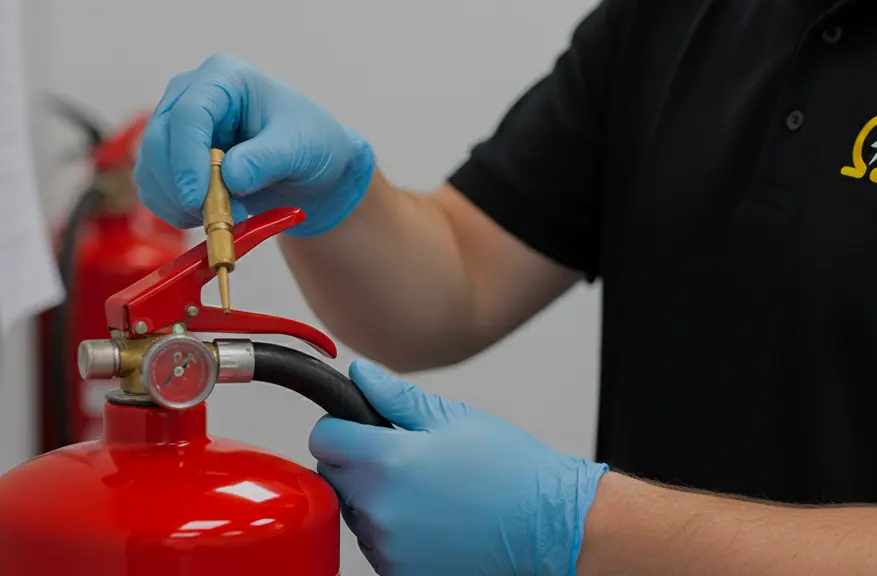
Fire Risk Assessments
 Fire Risk Assessments
Documented Safety Strategy
 Documented Safety Strategy
Whether you manage a boutique salon or a multi-site corporate headquarters, a documented fire strategy is essential. During assessments, inspectors heavily scrutinise electrical hazards, checking for daisy-chained extension cables, blocked distribution panels and up-to-date testing records. Resolving flagged issues is mandatory.
Annual Review Expectations
 Annual Review Expectations
Assessments must be “regularly reviewed” and kept up to date. NIFRS guidance strongly advises a review at least once every 12 months to ensure minor operational changes haven’t introduced dangerous hazards.
Immediate Legal Triggers
 Immediate Legal Triggers
A brand-new assessment must be commissioned immediately when encountering:
- Structural Alterations: Modifying the internal layout or escape paths.
- Change of Use: Converting a retail block into a hospitality venue.
- Staff Changes: Employing individuals with mobility restrictions.
The Core Legislation
 The Core Legislation
Electricity at Work Regulations 1991
 Electricity at Work Regulations 1991
The absolute bedrock of electrical safety in the workplace.
- Enforced By: Health and Safety Executive for Northern Ireland (HSENI).
- Your Duty: Maintain equipment proactively to prevent electric shock and fires.
- Evidence: Retain documented proof of regular inspections.
Fire Safety Regulations (NI) 2010
 Fire Safety Regulations (NI) 2010
Shifts the entire burden of fire prevention directly onto the business owner.
- Enforced By: Northern Ireland Fire and Rescue Service (NIFRS).
- Your Duty: Act as the “appropriate person” to actively reduce risks.
- Requirement: Eliminate primary ignition sources like faulty wiring.
The True Cost of Non-Compliance
 The True Cost of Non-Compliance
Delegating your safety checks to an uncertified handyman breaches statutory guidelines. A truly competent contractor must possess the technical qualifications and practical experience to identify hidden infrastructure dangers. Ignoring these rules brings severe, irreversible consequences.
Insurance Invalidation
 Insurance Invalidation
Every commercial property and public liability policy demands compliance with statutory health regulations. If an electrical fire occurs and your logbook lacks a valid EICR or an up-to-date fire risk assessment, your insurer can instantly void the policy, leaving you entirely liable for millions of pounds in structural damages and injury claims.
Criminal Prosecution
 Criminal Prosecution
Regulatory bodies do not view electrical compliance as optional paperwork. If an HSENI or NIFRS inspector uncovers poorly maintained systems, they can issue immediate Prohibition Notices, forcing your business to shut down completely. In severe cases involving injury or death, owners face unlimited fines and custodial sentences.

Secure Your Business Today
Protect your property, safeguard your employees and secure your commercial insurance coverage. Book your comprehensive compliance audit with Northern Ireland’s trusted specialists.
Get a Free QuoteWritten by the Senior Compliance Team at CTS Electrical Services
With years of dedicated experience across Northern Ireland, CTS specialises in commercial EICRs, PAT testing and bespoke electrical safety solutions for local trades, hospitality venues and the corporate sector.
Ready to secure your compliance?
Contact Our Engineers