

Operating a hospitality venue in Northern Ireland carries a unique and immense responsibility. From bustling Belfast restaurants managing high-temperature commercial kitchens to coastal hotels accommodating hundreds of sleeping guests, the fire risk profile is staggering. Under The Fire Safety Regulations (Northern Ireland) 2010, ensuring your fire alarm system is perfectly maintained is not just best practice—it is a strict statutory requirement.
 1. The Unique Risks of the Hospitality Sector
 1. The Unique Risks of the Hospitality Sector
Unlike a standard 9-to-5 office, hospitality venues are complex environments. Your fire detection system must be sophisticated enough to differentiate between the harmless steam of a busy kitchen and an actual electrical fire. Furthermore, hotels and B&Bs contain “sleeping risks.” Because occupants are unconscious and unfamiliar with the building layout, the fire alarm system must provide the earliest possible warning to ensure safe evacuation.
Depending on your venue you will likely be legally required to maintain a specific category of system under British Standard BS 5839-1:
- ■ Category L1 (Maximum Protection): Typically mandated for large hotels and care facilities. This requires detectors in every single room, cupboard and void to guarantee the earliest possible detection for sleeping guests.
- ■ Category L2: Often found in pubs, large restaurants and medium-sized venues. Detectors are placed in all high-risk areas (like kitchens and boiler rooms) and all escape routes.
2. The Mandatory BS 5839 Testing Schedule
 2. The Mandatory BS 5839 Testing Schedule
A fire alarm is only effective if it actually works when a crisis occurs. The Northern Ireland Fire and Rescue Service (NIFRS) expects to see a meticulously maintained Fire Safety Logbook detailing two distinct levels of testing:
- ■ The Weekly Test (Internal): This must be carried out by your own staff. Using a manual test key you must trigger a different “break glass” call point each week. This proves the bells/sounders are functioning and familiarises your staff with the alarm tone.
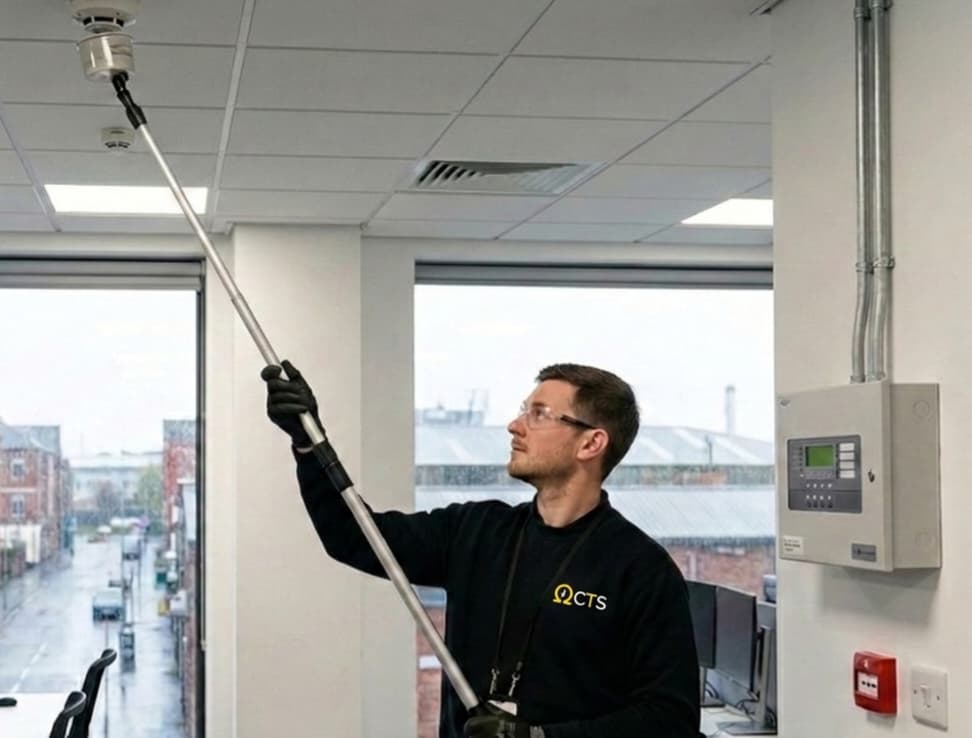
- ■ The 6-Monthly Service (Professional): It is a strict legal requirement that your entire fire alarm system is inspected and serviced by a competent professional at least every six months. At CTS Electrical Services our engineers test the main control panel, inspect the backup batteries and ensure every single smoke and heat detector is fully operational and compliant.
3. The Cost of False Alarms
 3. The Cost of False Alarms
In the hospitality industry a false alarm is not just an annoyance—it is a catastrophic loss of revenue. Evacuating a fully booked restaurant mid-service due to an overly sensitive smoke detector means comping dozens of meals, pouring expensive drinks down the drain and suffering reputational damage on TripAdvisor.
Professional 6-monthly maintenance directly prevents this. During our inspections we clean dust and grease from detector heads (the leading cause of false alarms) and ensure the correct type of sensors are installed. For example, a commercial kitchen should rely on rate-of-rise heat detectors rather than standard smoke alarms to prevent cooking fumes from triggering a full building evacuation.
If a fire occurs and your logbook shows missing 6-monthly service records your insurance provider can legally void your policy, leaving you completely liable for the structural damage and potential injury claims.

Do not risk your reputation or your guests’ lives. Contact CTS Electrical Services today to book your legally mandated 6-monthly fire alarm service.
Ready to secure your compliance?
Contact Our Engineers